Product overview
Get a complete view of the tools that power your business
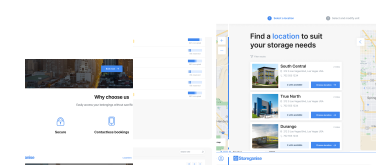
Get a complete view of the tools that power your business
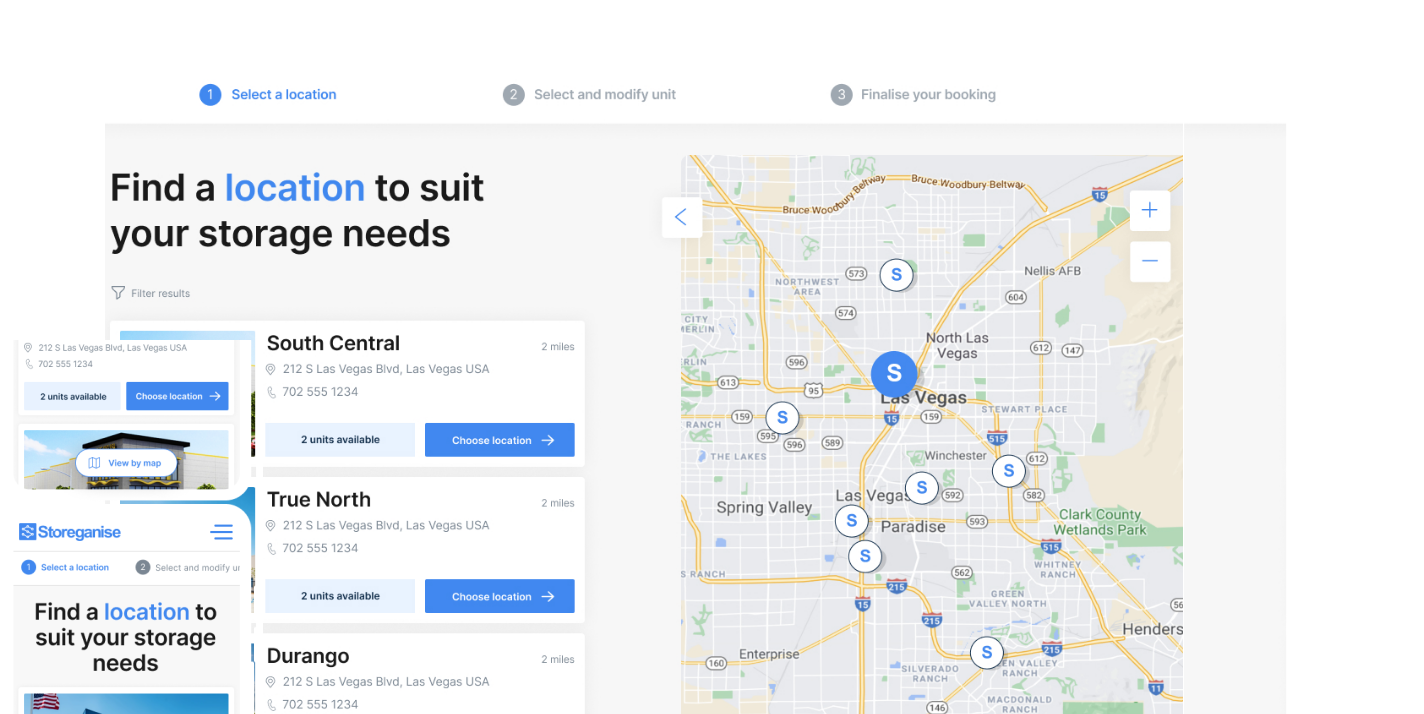
Let customers book and manage storage with ease
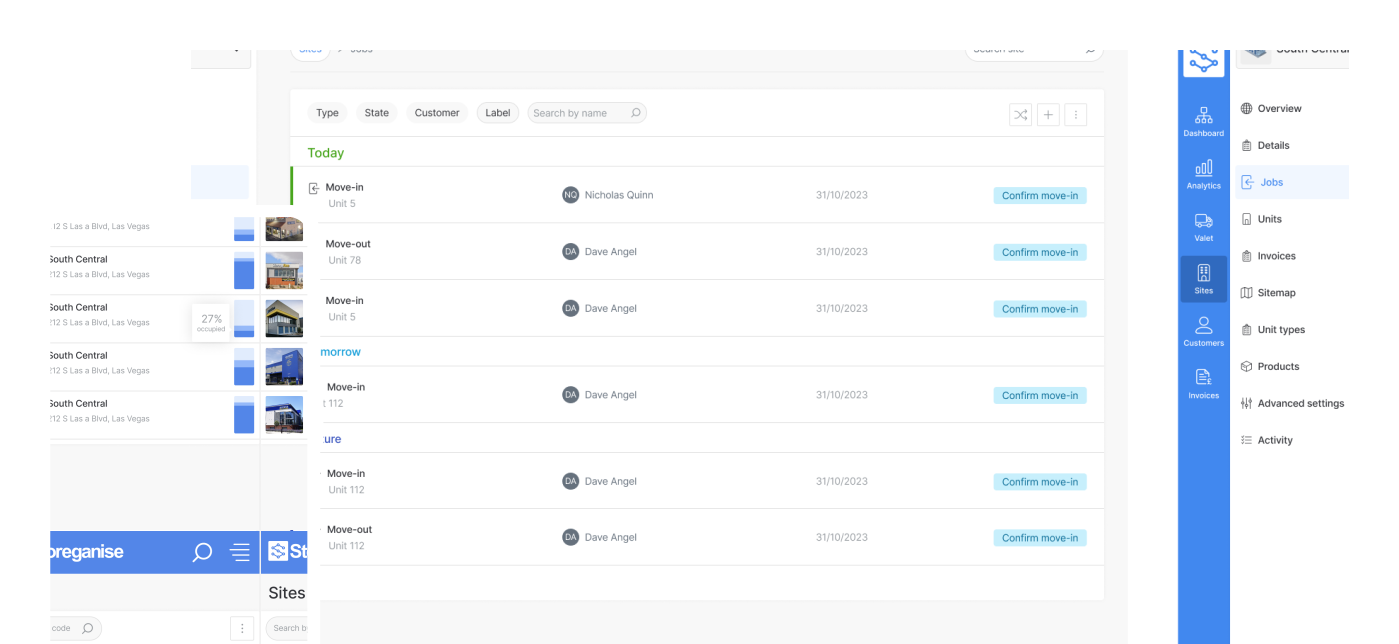
Manage your entire business in one place
Attract new customers with a website built for self-storage

Extend your business logic with endless integrations

Self-storage companies have rapidly included valet storage as a vital component. Reading this guide sets you off onto a right path of superior valet storage services.

Written by: Jack Colemanzo
Data validated by: Storeganise team
Published: 2025-09-03
Updated: 2026-08-28
Last updated: August 2026
By offering a simple customer experience with an offer suited for those needing a small amount of space, valet storage has grown into an industry trend. Many self storage companies either partner with valet service in their area or incorporate their own valet service. If you're considering breaking into valet storage, stick with this article: here are some major considerations and helpful tips to set you off in the right direction.
The idea of valet service in self storage has been around for a while now. The basic setup is that customers are given a chosen number of boxes to pack, those boxes then being picked up and stored in a facility. This differs from the traditional model of renting units for a period of time. Valet storage is a simple but very marketable tweak in the self storage formula. It's proven to be popular with users in urban areas that might just have a few things to put in storage and don't require a full unit. Customers who value convenience over anything will definitely be drawn towards this service, and in a post-covid storage world, valet storage might be more popular than ever.
Learn The Exact Steps on How To Set Up Your Self Storage Facility In This 5 Minute Read
Key Lessons from Industry Experts
The Psychology of Self-Storage Pricing
How to diversify your revenue streams
Steps to set you up for success
So what are the pros and cons? In short, the pros are quite plentiful:
It's an appealing, easily marketable service that will bring in new customers as well as a selling point to retain customers.
The cons on the other hand are mainly the initial money needed, as well as the overhead costs that will incur throughout its use. You'll need to rent out trucks, find somewhere to source boxes, as well as start with marketing your valet storage services on an existing website.
Before deciding whether valet storage fits your operation, understand what happens end-to-end. A valet service breaks down into five repeatable steps:
The whole model lives or dies on step 2 (accurate intake) and step 4 (accurate tracking). Miss either and you're paying staff to hunt through boxes.
If you're still on the fence about whether valet storage is worth your time and money, here are key things to consider:
Local competition
A major aspect to think about is whether any of your direct, local competitors offer a valet service. Your customers will always be searching the market for a better deal, so if other self storage companies near you offer this service, you don't want to be left behind. Alternatively, if they don't offer it, you could see it as a potential unique selling point for your company. Look into why they don't offer it, and if there's anything they're overlooking in not offering a valet service. Local industry trends will be set by your competitors and yourself, so it's good practice to keep an eye on them anyway.
Feasibility in budget
Of course, you'll have to consider whether incorporating this service is feasible with the money you currently have to run the business. Depending on how large your operation is, you'll have to think about whether you can maintain your margins while incurring the costs of maintaining this service. You'll need trucks, boxes, bins, extra labor costs, and many other extra expenses. Make sure you know how much you'll need to spend to set it up. We recommend you have a professional perform a solid feasibility study before making any serious investments.
Target audience and demographic
As with many other trends, some customers might not take to it, or think that your standard service is preferable for them. Depending on where you are, who you serve, and how you serve them, you'll have to make sure your target demographic actually likes a valet service. Again, urban residents and students are often drawn to this, while customers in a more suburban environment might just prefer normal self storage. If you don't do some digging, you'll just be sinking money that won't make any back.
Search the market for the best prices
Find the best place to source the things needed to set it up. Much like your customers, you have to scour the market for the best deal you can get. There will be a large variety of prices, perks, and other considerations while you search, just remember that the lower your expenses are, the larger your eventual profits will be.
Use technology to help you
As with adding any service, there will be an increase in processes, paperwork, and hassle, so using technology to your benefit will keep everything centralised. It reduces clutter and makes everything much easier. Most management software can help with paperwork and other menial tasks, meaning you can focus on offering the best service to your customers. Additionally, valet services are super simple to incorporate into your website, making it much more accessible and easy for customers to look into the new offering.
Pricing considerations
Even with a great product, customers will still want an extra incentive for trying a new service. Knowing this, you should think about how to price the valet service, as opposed to the traditional self storage. See "How to Price Valet Storage" below for the full cost-base method, zone-pricing framework, and add-on charges.
Tailor it to your customers
Not to sound like a broken record, but if you want to sell something, you'll have to consider who you're selling it to. The tips and considerations given above are all centered around making sure the product suits the customer. For example, if you know valet storage is popular among students, advertise more during the peak times such as during winter and summer break. You could also introduce referral deals or lower prices during these times as well.
Valet pricing needs to cover three things simultaneously: your storage costs, your pickup/delivery labor and fuel, and a margin. Build the price in three layers.
Layer 1: Cost base per bin per month.
Start from your own facility cost per sq ft. If a standard bin occupies 3 sq ft of shelf space, your storage cost per bin per month is roughly (annual $/sq ft ÷ 12) × 3. That's your floor, ignoring pickup and delivery.
Layer 2: Zone-based pickup and delivery.
Not every customer costs the same to serve. Overlay a zone map on your service area:
Setting zones explicitly stops you from losing money on the customer who lives 22 miles away.
Layer 3: Add-on charges.
Publish transparent add-on rates so exceptions don't eat your margin:
The customer sees a clean base price plus optional add-ons they control. You see actual cost coverage.
Three pieces make a valet operation work: routing, intake, and insurance.
Routing software. Manual route planning kills your margins as soon as you have more than one truck. Established options include Routific, Onfleet, and Circuit for Teams. All three handle multi-stop optimization with time windows; pick based on driver-app quality and integration with your customer-facing booking flow.
Intake equipment. The intake step is where valet operations either lock in profitability or lose it. What you need:
Transport insurance. Standard commercial auto insurance covers the vehicle but not the goods inside. You need cargo insurance (also called "motor truck cargo") plus bailee coverage for while items are in your warehouse. Talk to a broker who's underwritten moving companies before, not one who only writes general commercial policies.
Don't launch a full-service valet operation on day one. Start with two pickup windows per day, weekdays only, and cap capacity per window. That gives you:
Scale from there, one window at a time, as bookings force it.

Overall, introducing valet service will be at times tricky, but should be rewarding in the long run. Hopefully, these tips will help set you on the right track, so that you can set up a successful and profitable valet storage service at your company.
Storeganise fully integrates valet storage (as shown above) into your existing self storage service. Using our Operations App, you and your team can manage both services in one system, allowing for more efficient management of orders and deliveries. Check out the full list of features and integrations to see what you'll get.
Get a firsthand glimpse into what Storeganise can do for you. Book a free demo.
Related Articles:
Check Out Our E-Book: What To Consider When Setting Up a Valet Storage Service
Valet storage is a delivery-first version of self-storage: instead of renting a fixed unit and hauling your belongings there yourself, you book online, hand your boxes to a driver at a scheduled pickup window, and the operator stores, tracks, and delivers your items back on request. Each box or item is barcoded and tracked individually, so you can request specific items back rather than the whole set. It's especially popular in dense urban markets where car ownership is lower and small storage needs are common.
The workflow breaks down into five steps: online booking with a pickup window, item collection and barcode intake at the customer's home, transport to the facility, tracked storage in a shelved warehouse, and return delivery on request. See The 5-Step Valet Workflow above for the full breakdown. The whole model depends on accurate intake (photos + barcodes at pickup) and accurate warehouse tracking; miss either and you're paying staff to hunt through boxes.
Pricing is built in three layers: a cost base per bin per month (derived from your facility's storage cost per sq ft), zone-based pickup and delivery surcharges by distance from the facility, and add-on charges for stairs, oversized items, urgent delivery, and missed pickup windows. See How to Price Valet Storage above for the full cost-base method. Actual per-bin prices vary meaningfully by market: urban operators serving small orders typically charge more per bin than suburban operators with lower storage costs.
Traditional self-storage rents you a fixed-size unit for a monthly fee, and you handle transport and access yourself. Valet storage handles pickup, storage, and delivery for you, and charges per bin or item rather than per unit of space. Traditional self-storage suits customers who need to visit their belongings regularly or store bulky items; valet suits customers with smaller, out-of-sight needs and limited transport of their own.
It can be, but the margin structure is different from a traditional self-storage facility. Valet operations trade higher revenue per stored bin for higher per-order labor and vehicle costs, plus the intake and tracking overhead. Operators who build the service on tight zones, standardized bins, and route-optimization software make the model work; operators who launch without those often lose money on Zone-3 and long-distance orders. Start with two pickup windows per day and expand only as bookings force it (see Start Lean above).

Jack Colemanzo is the Head of Sales at Storeganise, based in Barcelona. With a strong background in the technology industry, spanning software development, sales management, and team leadership, Jack is a catalyst for growth and a builder of positive team culture.
View bio