Product overview
Get a complete view of the tools that power your business

Get a complete view of the tools that power your business
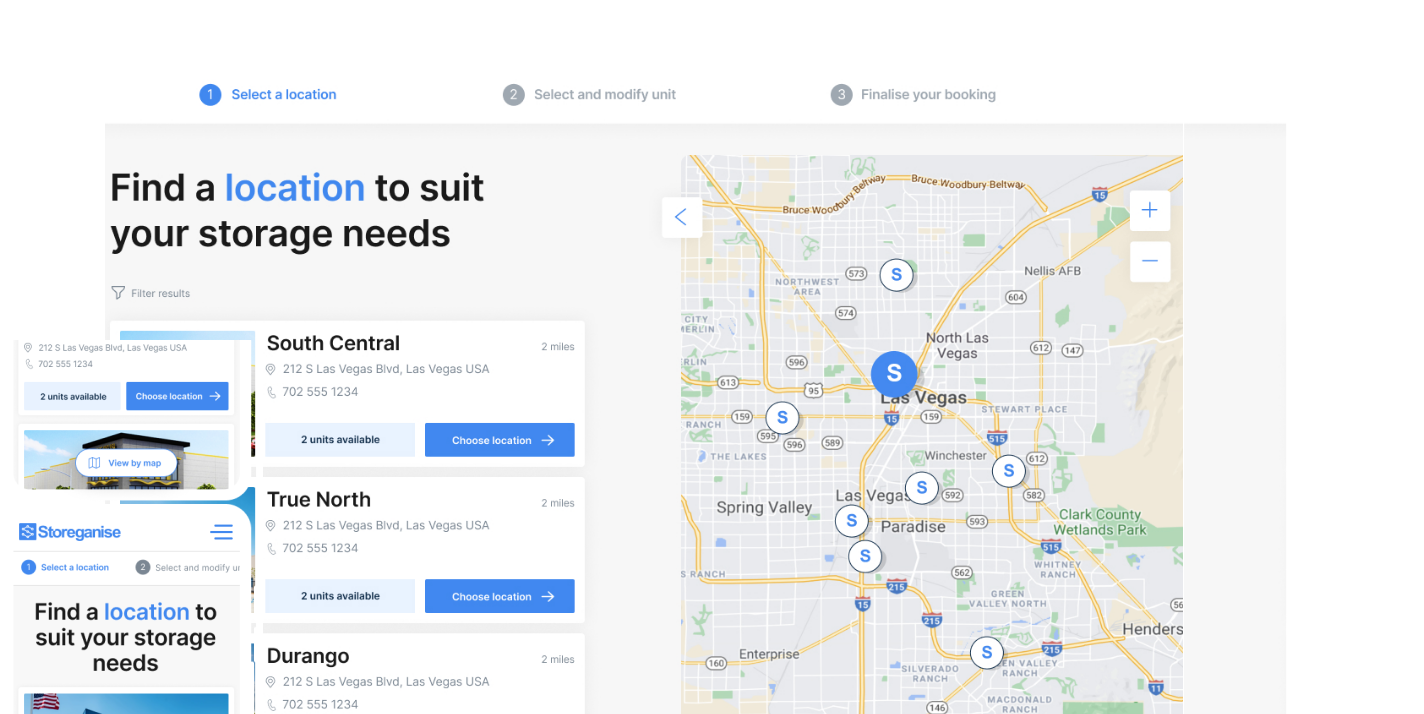
Let customers book and manage storage with ease
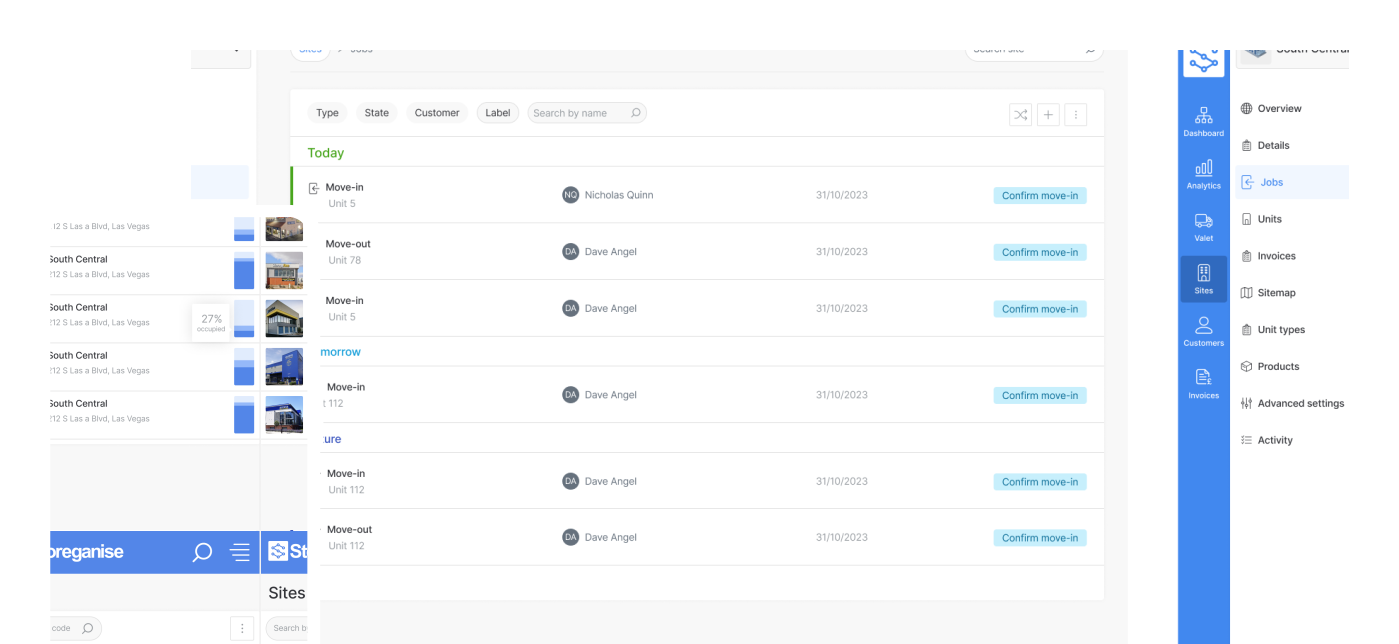
Manage your entire business in one place
Attract new customers with a website built for self-storage

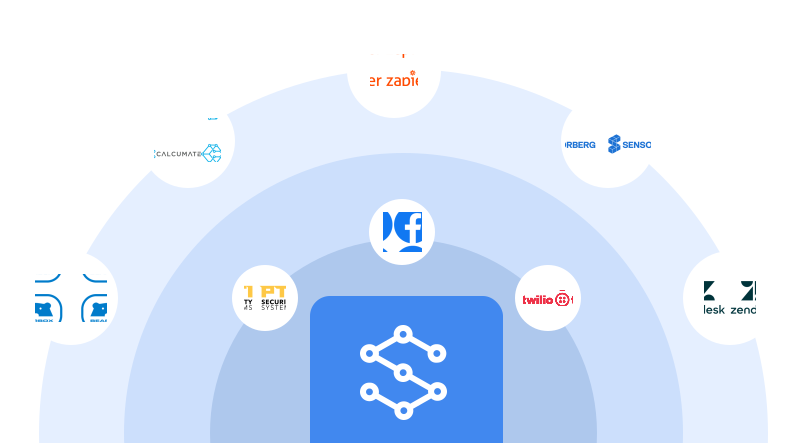
Extend your business logic with endless integrations
Find the latest self-storage statistics and trends driving the industry. Get important insights into the current state of the industry and future projections.

Written by: Jack Colemanzo
Data validated by: Storeganise team
Published: 2026-03-14
Updated: 2026-8-22
Key Takeaways
Self storage has experienced fascinating market trends in the 21st century, with businesses in this sector attracting increased customer attention. The US self-storage industry is large and mature, not an emerging category. See the Market Snapshot further down this page for the current, sourced numbers on its size and trajectory.
With the increasing demand for space, self storage has become one of the most viable solutions for people looking to declutter their homes or store goods for their e-commerce businesses.
"Landlords grow rich in their sleep." -John Stuart Mill
This observation highlights why real estate sectors such as self storage continue to attract investors looking for stable and long-term returns.
Let's examine some eye-popping self storage statistics and trends in this 2026 Self Storage Market Report to see how big the industry has become and where experts think it'll go next.
Updated August 2026 This page presents the latest statistics on the self storage industry, compiled by Storeganise. We continuously update this page as new data becomes available. If you have data to contribute or any questions regarding the information here, please email us at editor@storeganise.com.
US
The US self-storage industry has spent the past few years absorbing a construction boom, and new supply has slowed as a result. See the Market Snapshot below for the current annual figures on total facilities, space, and the supply pipeline.
For those looking to capitalise on this booming industry, now is the time to act. Whether you're considering investing in a new facility, expanding an existing one, or simply exploring the market, the potential for significant returns is substantial. Read on for some interesting self storage trends defining the future of this essential industry.
| Metric | Figure | Source |
|---|---|---|
| Total facilities | 50,000+ | Self Storage Association (SSA), as of 2026 |
| Total rentable space | 2+ billion sq ft | Self Storage Association (SSA), as of 2026 |
| New supply trend | Development has slowed markedly since the 2020-2022 construction boom, as elevated costs and softening rents cool new starts | Yardi Matrix annual outlook / Inside Self Storage 2026 investing outlook |
| Financing conditions | Lenders have grown more receptive to self-storage loans as the rate environment eases, though underwriting remains selective | Inside Self Storage 2026 investing outlook |
For what these financing and supply dynamics mean if you're building rather than buying, see our guide to self storage building costs.
Every figure above is re-pulled from the current-year Yardi Matrix annual outlook and SSA Almanac at each refresh. Last verified: August 2026.
| Unit Size | Sq Ft | Monthly Rent Range |
|---|---|---|
| 5x5 | 25 | $21-$38 |
| 5x10 | 50 | $42-$75 |
| 10x10 | 100 | $83-$150 |
| 10x15 | 150 | $125-$225 |
| 10x20 | 200 | $167-$300 |
Derived from the industry's $10-18/sq ft annual revenue range, the same method used in our guide to self storage profitability. Source: Marcus & Millichap Self-Storage Investment Outlook, as of 2026.
Ownership is heavily fragmented. The top REITs collectively hold roughly one-fifth to one-third of rentable sq ft nationally; the rest is independently owned and operated. Source: Self Storage Association (SSA), as of 2026.
At the top end, the scale gap is stark. FY2024 net income:
| Company | FY2024 Net Income |
|---|---|
| Public Storage | $2.084 billion |
| Extra Space Storage | $900.2 million |
| CubeSmart | $391.2 million |
| National Storage Affiliates | $183.3 million |
Sources: Public Storage FY2024 results, Extra Space Storage FY2024 results, CubeSmart FY2024 results, National Storage Affiliates FY2024 results, as of 2026.
So, what are some of the trends allowing self storage facilities to cater to this increasing demand?
Learn The Exact Steps on How To Set Up Your Self Storage Facility In This 5 Minute Read
Key Lessons from Industry Experts
The Psychology of Self-Storage Pricing
How to diversify your revenue streams
Steps to set you up for success
The following trends (both current and emerging) are shaping the future of the self storage industry:
In today's modern world, virtually all activities occur online. As a result, creating a website and establishing a presence on social media is essential to any business's modern success.
Retail giants like Walmart and Amazon aren't the only ones competing in the digital sphere. Self storage facility owners are increasingly adopting websites for their business to accommodate consumer trends and meet the increasing demand driven by increased urbanization and the need for additional storage space.

Any investor looking to build or invest in a self storage facility today should consider creating a reliable and speedy website. A well-designed website can help address various issues and attract new customers as the future of the self storage market leans towards increased technology adoption.
Recognizing the importance of digital presence, we've recently added the ability to create and edit your website directly from the Storeganise dashboard. This feature enables you to effortlessly manage your online presence, ensuring that your business stays competitive in this rapidly growing market.
The days of the merchant sitting at a desk with a calculator and a drawer partitioned to hold different currency denominations are long gone. In today's fast-paced world, self storage companies are adapting well to dealing with various costs. With more self storage businesses now using specialized software for budgeting and financial management, digital solutions have become the norm. A self storage software like Storeganise allows you to compute billing and accounting tasks with ease, helping you manage costs, taxes, and profits efficiently.
If you plan to join this trend, look for software with integrated payment processing, real-time reporting, and automated reminders. These features are key for streamlining operations and enhancing customer satisfaction. Also, opt for software that scales as your business grows and evolves.
In the fast-paced world of self storage, keeping track of consumer data and finances can be a daunting task. It's all too easy to misplace paper records or lose track of electronic data within spreadsheets. This is why robust security protocols are crucial to safeguarding sensitive information.
As your self storage business expands, managing new expenses, fluctuating market prices, tax obligations, utility bills, and payments from both new and overdue accounts can become increasingly complex. Recent self storage industry statistics reveal a growing trend: more self storage businesses are utilizing advanced data management software to streamline their operations and protect customer data.
As Google co-founder Larry Page once explained: "Technology should do the hard work so people can do the things that make them happiest." (Larry Page, Fortune Interview)
Today, the industry is rapidly adopting AI-driven monitoring systems and implementing tighter ID checks to bolster security. Digital locks and biometric identification are becoming the norm, reducing reliance on physical keys and enhancing access control.

A diverse range of data management software is available that not only shields your data from viruses and unauthorized access but also keeps track of overdue payments. By automating calculations, these tools virtually eliminate human errors, ensuring your information remains intact and secure.
For self storage operators, embracing these technological advancements is not just beneficial; it's becoming essential. By adopting these innovative solutions, you can maintain order and security in your consumer data, allowing you to focus on what truly matters, growing your business.
The self storage industry's shift to cloud technology is remarkable; facilities are increasingly seeking secure and more reliable ways to manage databases. With cloud services, self storage owners can control their storage units from any location on Earth, allowing for convenient data retrieval.
Cloud storage services are also cost-effective, preventing costly database crashes and restoration. What's more, database failures are rare due to cloud services' built-in repair systems.
Despite various marketing techniques, the time from initial inquiry to a signed lease can vary widely. However, most of the work in selecting a self storage facility can now be done online. Many self storage businesses are adopting online leasing to streamline this process.
To fully exploit this trend, ensure your website provides everything needed for a positive customer experience. Enhance the booking process by using reliable self storage software that automates billing and sends invoice reminders on time.
Sustainability is fast becoming a cornerstone of the self storage industry. Common initiatives include installing LED lighting, using recyclable packaging materials, installing climate control systems, and providing EV charging stations.
By adopting these practices, the industry is reducing its carbon footprint and attracting environmentally conscious customers. The operational savings from LED lighting and climate-control efficiencies also flow straight to the bottom line, which is why sustainability upgrades increasingly show up in new-build spec sheets rather than as retrofits.
Self storage facilities are enhancing customer convenience through various initiatives. User-friendly websites and online platforms now allow customers to book and manage storage units easily. Many facilities also offer contactless access options, enabling customers to enter the premises and access their belongings without physical interaction. These conveniences improve the overall customer experience and cater to evolving needs and preferences.
Investment in the self storage sector is on the rise. See the Who Owns the Industry section at the top of this page for the current REIT-scale figures.
Legendary investor Warren Buffett summarised the logic behind strong real estate investments: "Price is what you pay. Value is what you get." (Warren Buffett, Berkshire Hathaway Shareholder Letter)
This principle explains why investors continue to view self storage properties as reliable long-term assets. Deal activity includes strategic acquisitions by major operators and a growing focus on long-term "evergreen" funds dedicated to self storage properties, reflecting investor confidence in the sector's robust future.
It's clear that the self storage industry is growing rapidly from year to year, and facility owners are adopting these trends to keep up with the increasing demand.
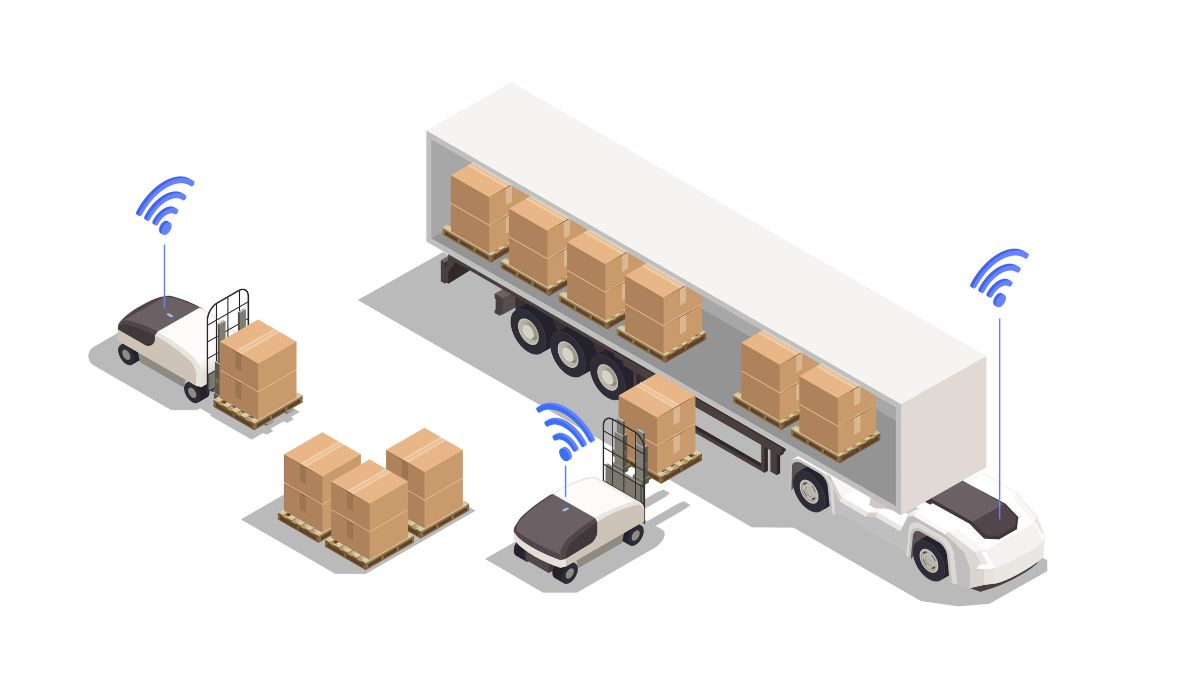
The future of the self storage industry looks strong as demand continues to increase worldwide.
"If you double the number of experiments you do per year, you're going to double your inventiveness." (Jeff Bezos)
This mindset explains why many storage companies are experimenting with technologies such as smart access systems, automated pricing, and digital leasing platforms.
Market analysts expect steady expansion due to urban population growth, rising consumer spending, and the increasing popularity of flexible storage solutions.
One major driver is the rise of e-commerce businesses and remote workers who need extra space to store inventory and equipment. Small online sellers often rely on self storage units instead of renting expensive warehouses.
Technology will also play a larger role in the next decade. Industry experts expect wider adoption of smart access systems, automated kiosks, digital locks, and AI-driven pricing tools that help operators improve occupancy and optimise rental prices. Purpose-built AI connectors are already emerging as the way to plug those pricing and communication models directly into a facility's operating stack rather than running them as separate silos.
At the same time, sustainability will become a bigger focus. Many new storage developments now include solar panels, LED lighting, and energy-efficient climate control systems to reduce operational costs and attract environmentally conscious customers.
Because of these factors, the self storage sector remains one of the most resilient real estate investments, offering steady demand even during economic downturns.
The US self-storage industry has spent the past few years absorbing a construction boom, and new supply has now slowed as elevated build costs and softening rents cool new starts. Even so, the underlying inventory is at record highs: over 50,000 facilities and more than 2 billion sq ft of rentable space nationally. Source: Self Storage Association (SSA), as of 2026. See the Market Snapshot at the top of this page for the current supply-trend and financing picture.
The following section outlines what shape that construction and demand pattern has taken across US regions.
Regional storage unit demand continues to see steady growth, though at a slower pace than the peak 2020-2022 building cycle. Growth is concentrated in the South and West, driven by population and employment gains in those regions, while the Midwest and Northeast see comparatively slower additions to inventory.
These regional differences in growth align with broader economic and population trends in the US. Employment rates and population are increasing more rapidly in Southern and Western states. At the same time, more affordable cost of living and business-friendly policies are attracting new residents and businesses to these areas.
For quantified regional inventory figures, the Yardi Matrix annual outlook is the source to pull from at each refresh (not their monthly reports). Verify against the current-year edition before publishing.

Self storage demand cuts across age groups and life stages: downsizing homeowners, families in transition between homes, students in seasonal storage, small businesses using units for inventory and equipment overflow, and remote workers reconfiguring home offices. This diverse renter base is what makes storage demand comparatively resilient across economic cycles.
For a deeper dive into what drives storage demand across those segments, see our guide to self storage profitability.
For current per-size rent ranges, see the Per-Size Street Rate Ranges table at the top of this page. Those ranges are derived from the industry's $10-18/sq ft annual revenue range (Source: Marcus & Millichap Self-Storage Investment Outlook, as of 2026) rather than a single point-in-time survey, so they hold up across the six-month refresh cycle without going stale.
Rates vary significantly by market: coastal metros like Los Angeles, San Francisco, and Seattle command the highest premiums, while Southern and Midwestern cities like Houston, Dallas, Chicago, and Atlanta typically sit lower per sq ft. Climate-controlled units, 24-hour access, and enhanced security features carry additional pricing power on top of the base range.
For a fuller worked example applying these ranges to a stabilized facility, see the worked cash-flow example in our profitability guide.
The self storage trends and statistics for 2026 and beyond point to continued growth. Expect further consolidation as major operators acquire smaller facilities, more climate-controlled units for protecting valuables, and tech improvements like digital locks and inventory tracking. Rental rates may continue climbing where demand stays ahead of new supply.
For investors looking for a sustainable investment, the self storage industry is a good place to start. Also, consider implementing reliable self storage software to help streamline operations and increase customer convenience.
References:
Yes. Roughly 1 in 10 US households currently rents a self-storage unit, and roughly 1 in 3 Americans has used self-storage at some point in their lives. Demand is driven by a durable mix of life events (moving, downsizing, divorce, inheritance) plus growing use by small businesses and e-commerce sellers who use storage as low-cost overflow space. Source: Self Storage Association (SSA), as of 2026.
Storage tenants come and go more than most commercial real estate. Expect 8-12% monthly churn even at a well-run, stabilized facility. That means a 300-unit site is re-leasing roughly 24-36 units every month at full stabilized occupancy, not sitting still. Source: Self Storage Association (SSA) operator surveys, as of 2026. See our storage business guide for how this shapes staffing and marketing budgets.
The self storage industry has seen several new trends, with the following being the most prominent:
The overall market size of the self storage industry was predicted to reach $58.26 billion in 2023 and grow at a CAGR of 7.5% to reach $89.94 billion by 2030. In the US alone, the industry accounts for more than 1.7 billion square feet of space.
The US has over 50,000 self-storage facilities and more than 2 billion sq ft of rentable space, making it the largest self-storage market in the world by a wide margin. Source: Self Storage Association (SSA), as of 2026.
The outlook for the self storage industry remains positive, with forecasts to reach $72.15 billion by 2028. Despite some slowdown in growth due to increasing interest rates and other economic factors, the industry’s fundamentals are strong, and demand continues to be robust.
Technology is also playing an increasing role in the industry, with more businesses adopting advanced technologies to improve their services and efficiency. That includes using mobile apps and self storage software solutions for easy access and management of storage units, automated kiosks for 24/7 customer service, and even AI and machine learning for predictive analytics and pricing strategies.

Jack Colemanzo is the Head of Sales at Storeganise, based in Barcelona. With a strong background in the technology industry, spanning software development, sales management, and team leadership, Jack is a catalyst for growth and a builder of positive team culture.
View bio